
The short answer
To build a digital pipeline without losing what works in person, keep field sales and events at the centre and add the layer buyers now use first. Fix the website so it passes due diligence, make executives visible on LinkedIn, run each event as a year-round campaign, add webinars and put every relationship in the CRM. Measure qualified pipeline monthly.
Key takeaways
- In-person selling still works, but buyers rank a shortlist before first contact, so firms that cannot be found or checked online are left out.
- Hybrid selling means buyers can find, check, learn from and meet you in any order, with every step leading to the people who sell.
- The website is the first meeting for most new buyers, and it needs proof, people and a clear next step.
- Run each trade show as a campaign with a target list, executive invitations, booked meetings and structured follow-up.
- Move relationships from people's heads into a CRM built around the target accounts and the full buying group.
Why do B2B companies that grow in person need a digital pipeline?
B2B companies that grow in person need a digital pipeline because buyers now decide who to meet before anyone shakes a hand. Field sales, trade shows and client dinners still close business. What has changed is the research that happens before them, and a firm that cannot be found or checked online is left out of it.
If you lead an industrial supplier, an engineering firm, a specialist services business or a manufacturer, the pattern is probably familiar. Your best accounts were won by a senior person who travelled, built trust over years and kept the relationship warm. Growth came from the trade show calendar, the industry dinner and introductions from people who already knew you. It worked, and for many firms it still does.
The risk is not that in-person selling has stopped working. It is that it now works only for buyers who already know you. A buyer outside your network starts with a search, an AI assistant, a LinkedIn profile and your website. If those touchpoints say little, the buyer never asks for the meeting where your strengths would show.
The aim of this guide is to keep everything that works in person and add the digital layer around it. That means hybrid selling, a website that passes due diligence, events that run all year, executives who are visible between meetings, webinars that extend the conversation and a CRM that holds what your people know.
How do B2B buyers research suppliers before they make contact?
B2B buyers research suppliers mostly on their own, across many channels, and they rank a shortlist before they speak to any of them. By the time a buyer contacts you, most of the decision has already been shaped.
The research is consistent on this. The 2025 6sense Buyer Experience Report, based on a survey of nearly 4,000 buyers, found that buyers make first contact with sellers 61% of the way through the journey. 94% had ranked their shortlist before that contact, and 79% initiated the first contact themselves rather than responding to a seller.
Gartner finds the same preference for working alone. In a survey of 646 B2B buyers published in March 2026, 67% said they prefer a rep-free experience and 45% had used AI during a recent purchase. A second Gartner release in May 2026 found buyers used an average of seven information sources in a recent purchase.
61%
Point in the buying journey when buyers first contact a seller (6sense, 2025)
94%
Buyers who ranked their shortlist before first contact (6sense, 2025)
67%
B2B buyers who prefer a rep-free experience (Gartner, 2026)
10
Average channels B2B buyers use in their journey, up from five in 2016 (McKinsey, 2024)
For a firm that grows in person, the implication is direct. The meeting is still where trust is confirmed, but the shortlist is built somewhere else. A strong reputation in the room does not help a buyer who has already ranked three competitors whose proof was easier to find.
Do in-person sales still matter in B2B?
In-person sales still matter in B2B, especially for new suppliers and large first purchases. They matter most when they sit inside a hybrid model where buyers can move between channels without friction.
McKinsey's 2024 B2B Pulse survey of nearly 4,000 decision makers found that preferences now split roughly into thirds between in-person, remote and digital self-service. 41% of buyers still prefer in-person channels with new suppliers, and 40% prefer them for first-time purchases. At the same time, buyers now use an average of ten interaction channels, and more than half said they would likely switch suppliers if the experience across channels was not smooth.
The trade show floor has also come back. IAEE reports that the CEIR Total Index for US B2B exhibitions reached 95.6 in the fourth quarter of 2024, a 6.0% improvement on the year before and just 4.4% below pre-pandemic levels. The 2026 CEIR Index report forecasts further growth of 2.1% in 2026. Buyers are attending again. The question is what happens before and after they walk past your stand.
In-person only vs hybrid growth
In-person only
- New accounts come from the people your sellers already know
- Trade shows produce a stack of cards and a few follow-up calls
- Executives are known only to people who have met them
- The website is a brochure nobody updates
- Relationship history lives in sellers' heads and inboxes
- Pipeline is reported as a feeling, not a number
Hybrid growth
- New accounts are pursued from an agreed target list
- Each event is a campaign that runs before, during and after the show
- Executives are visible to the whole market between meetings
- The website passes a buyer's due diligence
- Every account, contact and conversation is in the CRM
- Qualified pipeline is reviewed with leadership monthly
Hybrid does not mean replacing field sales with software. It means the buyer can find you, check you, learn from you and meet you, in whatever order suits them, and that every one of those steps leads toward a conversation with the people who sell.
What should your website show to pass a buyer's due diligence?
Your website should show, within seconds, who you serve, what changes for them, proof from comparable clients and a clear next step. For a firm that grows in person, it is the first meeting most new buyers will have with you.
Many relationship-led firms run sites that describe services and history but hold almost no proof. That made sense when every buyer arrived through an introduction. It fails a buyer who arrives cold and is comparing you with suppliers whose case studies, credentials and leadership are easy to see.
What a buyer checks on your website, and how to answer it
| What the buyer checks | The question behind it | How to answer it |
|---|---|---|
| The first screen | Do they serve companies like mine? | Name the industries, buyers and problems you serve in plain words |
| Proof | Have they done this before, at our scale? | Case studies with the problem, the approach and a measured result |
| People | Who would we actually work with? | Leadership and specialist profiles with real experience and photos |
| Credentials | Are they safe to buy from? | Certifications, partnerships, sites, standards and client logos |
| Point of view | Do they understand our industry? | Articles, webinars and guides written from your delivery experience |
| Next step | How do I start a conversation? | One clear route to a named person, with fast replies |
| Technical health | Is this a serious, current business? | Fast pages, no broken links, working forms and tracking |
Fix the foundation as well as the words. Site health, analytics, form routing and CRM connections decide whether a visit turns into a conversation your team can act on. In the cybersecurity services firm Codax worked with, the site score rose from 51 to 80 and critical site issues fell from 8 to 0 before any outbound was sent. Monthly visitors grew from 2,800 to 5,000 over the year.
The same work now shapes whether AI assistants recommend you. Buyers increasingly ask an assistant for a shortlist, and the assistant draws on what it can read about you. The same firm's AI visibility score rose from 20 to 77, and it is now named in Google AI answers for its category.
How do you turn trade shows and events into year-round campaigns?
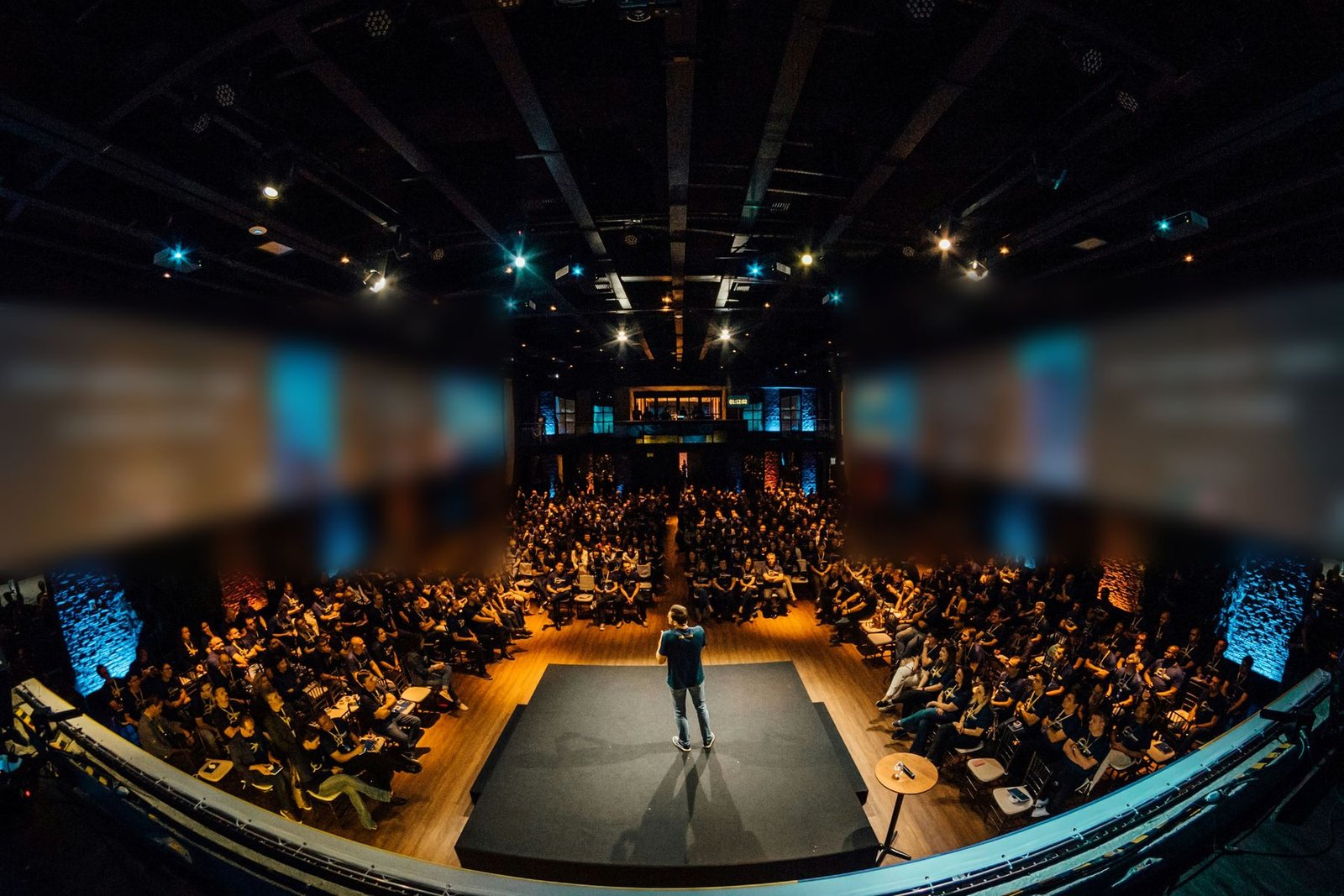
You turn events into year-round campaigns by treating each one as a campaign with a target account list, a before, a during and an after, rather than a three-day appearance. The show becomes the peak of a conversation that started months earlier and continues long after the stand is packed away.
Most firms that grow in person spend heavily on events and measure them by cards collected. The cost of the stand, the travel and the senior time is high, and the follow-up is often a single email sent a week later. The value of events is real. It is simply not captured.
Running an event as a campaign
Agree the accounts
Six to eight weeks out, agree with sales which target accounts will attend or should be invited, and which roles you want to meet at each.
Invite in the leader's name
Send invitations from a named executive, by email and LinkedIn, offering a specific meeting, a briefing or a seat at a dinner. Founder-signed invitations earned 3x the acceptances in the cybersecurity engagement.
Book meetings before the show
Fill the calendar in advance so the stand is the place for planned conversations, not chance encounters.
Capture every conversation
Log each meeting in the CRM on the day, with who attended, what was discussed and the agreed next step.
Follow up within the week
Send a personal note with something useful from the conversation, such as a case study, a talk recording or a short summary.
Keep the accounts warm
Move event contacts into content, webinar invitations and retargeting so the relationship continues until the next meeting or the next show.
Run smaller formats between the big shows. A private dinner for twelve senior buyers, a roundtable at a partner's office or a site visit to your plant often produces more qualified pipeline than a stand in a large hall. Each one feeds the same account list and the same CRM.
Treat events as a measured channel. In the cybersecurity services firm, events added $247K in yearly qualified pipeline once they were run as campaigns tied to the target account list, rather than standalone appearances.

How should executives show up on LinkedIn?
Executives should show up on LinkedIn as the same people buyers would meet in person: specific, experienced and useful. In a relationship-led firm, buyers trust the leaders before they trust the brand, so the leaders' visibility between meetings carries more weight than company pages.
The 2024 Edelman and LinkedIn B2B Thought Leadership study of 3,500 global decision makers found that 73% consider thought leadership a more trustworthy basis for judging a company's competence than its marketing materials. 86% said they would be moderately or very likely to invite an organisation that produces valuable thought leadership into an RFP process, and 60% would pay more to work with one. The same research notes that 95% of a B2B company's potential customers are not actively buying at any given time.
That last figure is the case for presence. Field sales reaches buyers who are in market now. Executive content reaches the 95% who will be in market later, so they already know who you are when the need arrives.
- Write from delivery, not from marketing. The most credible posts describe a real problem your team solved, a lesson from a site visit or a view on where the industry is heading.
- Keep the time small and regular. One to two hours a month of recorded interviews can produce posts, articles, newsletters and invitations in the executive's own words.
- Use the executive as the sender. Invitations, outreach and ads from a named leader outperform the company brand. In the cybersecurity engagement, founder ads achieved 2.4x the click-through of company ads.
- Connect online and in person. Post before an event, meet the people who engaged and follow up afterwards. The online presence warms the room.
In the agentic AI healthcare firm we worked with, the CEO as sender produced 3x the replies, and leading with the CMIO as the second voice produced 2.1x the meetings. Buyers responded to people they could picture across the table.
“The relationships these companies have built are real. The work is letting buyers who have not met you yet see the same people your clients already trust.”
Do webinars work for businesses that usually sell in person?
Webinars work well for businesses that usually sell in person, because they put your experts in front of buyers at the stage when those buyers are researching on their own. They extend the trade show conversation to people who could not travel and give your field team a reason to follow up.
The format matters more than the volume. A webinar built around a real operating problem, with a customer or practitioner on the panel, earns attention that a product presentation does not. Topic choice alone can double the result.
What moved webinar results in two engagements
Source: Codax, agentic AI healthcare firm and cybersecurity services firm
In the healthcare engagement, five webinars drew 618 registrants with 43% live attendance. Every registrant became a named contact in the CRM, attached to an account on the target list, with a recorded reason to call. For a field team, that is a warmer start than any purchased list.
Use each webinar more than once. The recording becomes a page on the site, short clips become executive posts and the questions asked become the next article. One hour of expert time produces a month of material.
How do you get client relationships out of people's heads and into a CRM?
You get relationships into a CRM by making it the place where the selling actually happens, not an admin task added at the end of the day. Agree a few definitions, log only what matters and make the information useful to the people who enter it.
In many firms that grow in person, the most valuable asset is the knowledge in a few senior sellers' heads: who the real decision maker is, which plant manager championed the last order, when the contract renews and which competitor was in the room. When one of those people leaves, retires or is simply busy, the relationship goes with them.
- Agree the target account list with sales and load those accounts first.
- Map the buying group in each account, by role, not only by the contact you already know.
- Define what a qualified opportunity means, in writing, and use the same definition everywhere.
- Log meetings, event conversations and webinar attendance against the account, on the day.
- Connect the website, forms and email so digital signals appear next to field notes.
- Review pipeline from the CRM with leadership monthly, account by account.
Mapping the buying group matters because relationship-led firms often know one person very well and nobody else. Gartner's research describes buying groups that rely on many sources and validate what they find with sellers. A single contact cannot carry that process alone. When the CRM shows every role in the account, marketing can reach the people your sellers have not met yet.
How long does it take to build a digital pipeline alongside field sales?
Expect three to four months of foundation work before outbound starts, with the first qualified opportunities from new channels around month five and a clear trend by month nine. Field sales continues throughout, and benefits early from a better site, better events and better follow-up.
A typical first year, cybersecurity services firm
- Month 1Assessment of the site, CRM, events, sales notes and target accounts
- Months 2 to 3Site rebuilt, CRM and tracking repaired, executives publishing
- Month 4First outbound sequences to the agreed account list
- Month 6Yearly qualified pipeline reaches $1.07M
- Month 9$1.69M in pipeline and named in Google AI answers
- Month 12Yearly qualified pipeline reaches $2.2M, up 4x from $548K
By the end of the year, 61 accounts were deeply engaged and 35 were in qualified pipeline. The combined audience grew 74%, from 28,500 to 49,681. Events added $247K in yearly pipeline and its Google Cloud security partnership, its biggest unused asset at the start, added $132K a year in partner-sourced pipeline.
Buyers in long, relationship-heavy cycles need repetition. In the healthcare engagement, the median time from first touch to first meeting was 61 days, and retargeting known accounts produced meetings 4x cheaper than targeting cold job titles. Patience is part of the plan, and so is measuring every step so the plan can change.
How digital and in-person work together
The buyer finds you through search, AI answers, an executive post or a partner
The website, case studies and leadership profiles pass due diligence
The buyer attends a webinar, reads a guide or accepts an event invitation
A senior seller meets the buyer in person, already known and already trusted
The opportunity is logged, qualified and reviewed with leadership monthly
Who should run the move from in-person to digital growth?
The move should be run by one senior owner accountable for qualified pipeline, who works alongside the sales leaders and respects what they have built. Splitting it between an events coordinator, an agency and a website vendor produces activity in each channel and no change in the number.
That is the model Codax runs. A growth department is a senior growth lead and a delivery team covering the functions this guide describes, from website and executive presence to webinars, in-person events, conferences and marketing operations, against one qualified pipeline number. The method, Signal-Based ABM, reads the signals inside the business, such as which accounts your sellers know and why clients bought, alongside signals in the market.
Every engagement runs in five phases: Assess, Fix, Build, Test and Scale. The assessment comes first, with a written report, a prioritised repair list and a first read on the account list, before anything is sent. You can see the full method on how we work. For the brand side of the same shift, read enterprise brand and events, and if most of your growth has come through introductions, growing a referral-dependent business covers that pattern in detail.
Questions and answers
How do I move my B2B sales from in-person to digital?
Do not move away from in-person selling. Add a digital layer around it. Fix the website so it passes due diligence, make executives visible on LinkedIn, run events as campaigns, add webinars and log every relationship in a CRM. Then measure qualified pipeline from each channel monthly.
Are trade shows still worth it for B2B companies?
Yes, when they are run as campaigns rather than appearances. Attendance has recovered, with the US CEIR Index just 4.4% below pre-pandemic levels at the end of 2024. The value comes from booking meetings with target accounts in advance and following up within the week.
What is hybrid selling in B2B?
Hybrid selling combines in-person meetings, remote conversations and digital self-service so buyers can move between them freely. McKinsey's 2024 B2B Pulse found buyer preferences split roughly into thirds across those three, and buyers now use an average of ten channels.
Should our CEO be active on LinkedIn?
In a relationship-led firm, yes. Buyers trust leaders before brands. The 2024 Edelman and LinkedIn study found 73% of decision makers trust thought leadership more than marketing materials when judging competence. One to two hours a month of recorded interviews is enough to start.
How long does it take to build a digital pipeline?
Expect three to four months of foundation work on the website, CRM and executive presence before outbound starts. In the cybersecurity case, yearly qualified pipeline reached $1.07M by month six and $2.2M by month twelve, a 4x increase.
Sources
- Five fundamental truths: How B2B winners keep growing, McKinsey and Company
- 2025 B2B Buyer Experience Report, 6sense
- Gartner Sales Survey Finds 67% of B2B Buyers Prefer a Rep-Free Experience, Gartner
- Gartner Survey Finds 69% of B2B Buyers Turn to Sales Reps to Validate AI-Generated Insights, Gartner
- The B2B Buying Journey, Gartner
- Thought leadership gets B2B buyers back into the game, Edelman
- IAEE Releases Comprehensive Update of U.S. B2B Trade Show Industry, IAEE
- IAEE Releases 2026 CEIR Index Report, IAEE