
The short answer
Enterprise brand strategy in B2B is the work of making sure your firm is already known, trusted and shortlisted before a buyer starts a tender. For banks, telcos, conglomerates and professional services firms, that means running reputation, executive presence and events as one programme, measured against account engagement and qualified pipeline rather than impressions.
Key takeaways
- Most of your future buyers are not in market today, so the shortlist is decided by what they already believe about you.
- Executive thought leadership works when your leaders are the voice, captured from recorded interviews rather than ghostwritten from scratch.
- Run every event as a campaign with a standard for who is in the room, not a headcount target.
- Co-hosted executive sessions with trusted partners reach rooms your own list cannot fill.
- Measure brand and events against account engagement and qualified pipeline, never impressions alone.
Why does brand matter for large B2B companies?
Brand matters because it decides who makes the shortlist before anyone in your firm knows a decision is being made. In a large enterprise sale, the tender, the RFP or the first call comes at the end of a long period in which buyers formed a view of you without telling you.
Research from LinkedIn's B2B Institute, carried out with Professor John Dawes of the Ehrenberg-Bass Institute, puts it plainly. Only 5% of B2B buyers are in market at any given moment, so 95% of the people you reach are not buying right now. The same research found that 80% of companies switch business banks once every five years. If you sell to that kind of buyer, the work you do in the other four years is what gets you into the fifth.
Buyers also do most of their checking alone. Gartner found that 61% of B2B buyers prefer an overall rep-free buying experience, and that 73% actively avoid suppliers who send irrelevant outreach. A later Gartner survey found that 45% of buyers used generative AI during a recent purchase, mainly to gather information on vendors and products, and that buyers draw on an average of seven information sources.
Put those together and the picture is clear. A buying group of senior people, most of them not in market, each checking your reputation, your leaders and what AI answers say about you before anyone picks up the phone. Brand is not decoration in that sale. It is the shortlist.
What does marketing do in a business that does not run on marketing?
In a bank, a telco, a conglomerate or a large technology or professional services firm, marketing exists to protect and extend reputation, put senior leaders in front of the right people and create rooms where relationships start. It is not a demand generation engine, and running it like one wastes money and credibility.
These businesses win through relationships, tenders, renewals and referrals. The sale is long, the buying group is wide and the people who sign rarely fill in a form. Codax has worked with leading banks and telcos, and the pattern holds every time. The firms that grow treat marketing as the system that makes every relationship easier to start and every tender easier to win.
That system has three working parts.
- Reputation. What the market, search engines and AI answers say about you when you are not in the room.
- Executive presence. Your leaders, visible and credible, saying things buyers find worth reading.
- Events. Executive sessions, roundtables, webinars and hosted dinners where the right accounts meet your people.
Each part feeds the next. Reputation earns attention, executive presence turns attention into trust, and events turn trust into conversations that sales can follow up.
Reputation now includes what AI answers say about you
A buyer preparing for a tender now asks an AI tool to compare providers before they ask a colleague. If the answer leaves you out, or describes the firm you were ten years ago, you have lost ground before the first meeting. The same Gartner research found that 69% of buyers prefer to validate AI-generated insights with sales reps, so what the AI says sets the agenda for the first conversation.
Treat search and AI visibility as part of reputation. Publish clear pages that answer the questions your buyers ask, keep the facts about the firm consistent everywhere they appear, and make sure your leaders' published views are easy to find and cite.
From reputation to pipeline
The market, search and AI answers already know who you are and what you stand for.
Your leaders publish a point of view the buying group reads and remembers.
Target accounts attend sessions, read content and return to the site.
You are invited to the tender or the first conversation before competitors are called.
Sales works real opportunities, reviewed account by account every month.
How should enterprise leaders build executive thought leadership?
Make your senior leaders the voice of the firm, and capture what they think from recorded interviews rather than asking them to write. Buyers trust people more than logos, and a leader with a clear point of view is the most credible asset a large firm has.
The evidence is strong. In the 2024 Edelman and LinkedIn B2B Thought Leadership Impact Report, 73% of decision-makers said thought leadership is more trustworthy than marketing materials. 86% said they would be moderately or very likely to invite a firm producing strong thought leadership into the RFP process, and 60% said good thought leadership makes them willing to pay a premium.
Those readers are paying attention. The same report found that 52% of decision-makers and 54% of C-level executives spend an hour or more a week reading thought leadership. Your buyers are reading. The question is whether they are reading your leaders.
How to run it without taking over the calendar
Leaders in large firms do not have time to write, and ghostwritten posts read like it. The answer is to interview them. A recorded conversation about a real client problem produces better material in thirty minutes than a week of drafts, and it sounds like the person because it came from the person.
- Agree two or three themes the firm has earned the right to talk about, drawn from what clients ask and what the leaders believe.
- Record a short interview on one theme at a time, built around a specific question from a real client conversation.
- Turn each interview into a set of pieces: a post, a longer article, a newsletter section and a line sales can use.
- Publish from the leader's own profile first, then amplify through the company page and paid distribution to the account list.
- Read who engages, and pass named engagement from target accounts to sales the same day.
The test of executive presence is not followers. It is whether the right people at the right accounts are reading, and whether sales hears your leaders' ideas repeated back on calls.
How do you run B2B events as campaigns?
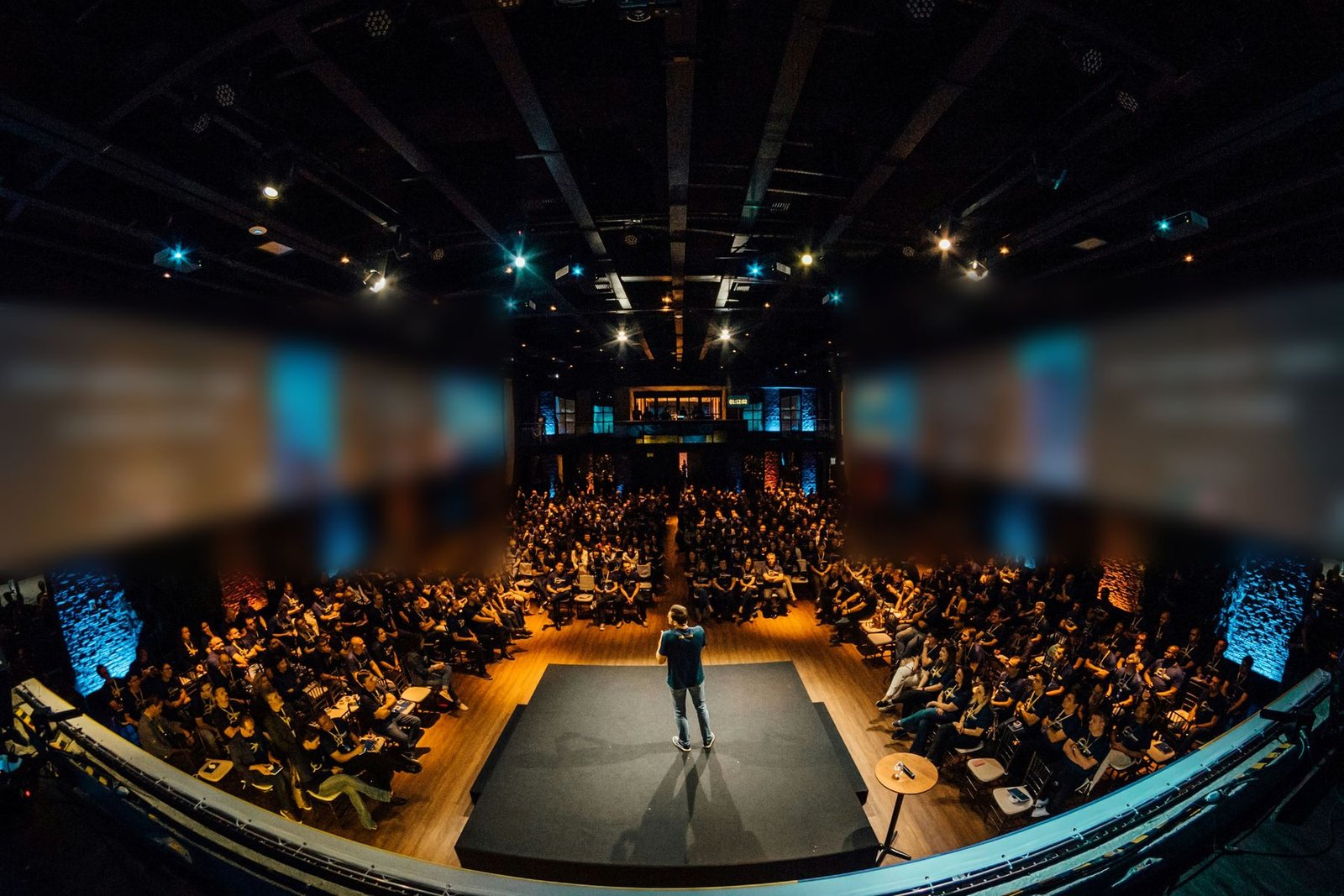
Run every event as a campaign with weeks of work either side of the day, and judge it by who was in the room and what happened afterwards, not by headcount. A room of forty exact-fit buyers is worth more than a hall of four hundred people who will never buy.
For enterprises, events are often the most important channel, because they are where relationships start. They are also where budget leaks fastest. A packed reception full of vendors, students and existing contacts looks good in a photo and produces nothing a sales team can use.
We hold every event to a written set of standards: who registers, who attends, who stays, who acts, and how many qualified conversations follow within two weeks. They are set out in full in five standards every B2B webinar should meet, and they apply just as well to a roundtable or a dinner.
An event run as a campaign
Before: define the room
Write one sentence describing who must be in the room, then build the invite list from the agreed account list, not from whoever clicks an ad.
Before: recruit for reach
Bring in a guest or partner speaker the audience already trusts, and send invitations in waves from a senior leader's name.
During: earn the hour
Open on the problem, let the guest set the frame and your expert supply the depth, and end with one clear next step.
After: tier and follow up
Tier every attendee within 24 hours and have a senior leader contact the top tier within 48 hours.
After: keep it working
Turn the session into clips, a short summary for sales and the topic for the next event.

Which event formats suit a large enterprise?
Pick the format by the conversation you want, not by habit. Each one has a different job in the relationship.
- Executive roundtables. A small group of senior buyers around one problem, with your leader chairing. Best for starting relationships at board and C-suite level.
- Hosted dinners and receptions. Lower agenda, higher trust. Best for deepening relationships with accounts already in conversation.
- Webinars. Reach across regions and seniority, and the easiest format to measure. Best for building engagement inside the wider buying group.
- Conference appearances. Your leader on a stage the market already attends. Best for reputation, as long as the follow-up is planned before the session.
Most enterprise programmes need all four in a deliberate rhythm, planned around the account list and the sales calendar.
Two tests from our work with a cybersecurity services firm show how much the details matter. Founder-signed invitations earned 3x the acceptances of standard invitations. A session on SOC operations drew twice the registrations of one on compliance. Who invites and what the room is about decide whether the right people turn up.
How do partnerships and co-hosted executive sessions extend your reach?
Co-host with a partner whose name your buyers already trust, and you reach a room your own list cannot fill. A shared session gives the guest list two sources, the agenda two perspectives and the buyer a reason to attend that has nothing to do with being sold to.
Large firms usually sit on partnerships they do not use. Technology alliances, industry bodies, clients willing to speak and advisers with their own audiences are all distribution. The cybersecurity services firm we worked with was a Google Cloud security partner, and that partnership was its biggest unused asset. Executive sessions co-hosted with Google put the firm in front of CISOs and CIOs it had no other route to.
Over twelve months, events produced $247K in yearly pipeline for that firm, and partner-sourced pipeline reached $132K a year. Both sat inside a wider result, with yearly qualified pipeline growing from $548K to $2.2M. The full account is in the cybersecurity case study.
Partnerships work when both sides hold the same standard. Agree the room together, split the invitation list by account, agree that neither side sells from the stage, and decide before the day who follows up with whom.
How do you measure enterprise brand and events?
Measure brand and events by what they do to target accounts: engagement, conversations and qualified pipeline. Impressions, follower counts and attendance totals are easy to report and tell you almost nothing about whether the right buyers are moving.
In the cybersecurity work, opportunities took an average of 5 touches before the first call, and 8 in 10 opportunities were touched by three or more channels. That is how enterprise buying works. No single post or event closes a deal, so the measures have to follow the account across every channel.
What to measure, and what not to
| Measure this | Not this | |
|---|---|---|
| Reputation | Search and AI answer visibility for buyer questions | Brand mentions with no context |
| Executive presence | Engagement from named target accounts | Follower count and total likes |
| Events | Share of the room on the account list | Total registrations |
| Event follow-up | Qualified conversations within 14 days | Leads passed to sales |
| Partnerships | Partner-sourced qualified pipeline | Number of partners signed |
| Overall | Qualified pipeline, reviewed account by account | Impressions and reach |
Account engagement is the bridge between brand and pipeline. Define it before the programme starts: which accounts are on the list, which people in each buying group matter, and what counts as engaged, such as attending a session, reading several pieces from a leader or returning to the site. In the cybersecurity work, 61 accounts became deeply engaged and 35 of them reached qualified pipeline.
Review it every month with leadership, account by account. Which accounts moved, what moved them and what the next touch should be. That review is where reputation work earns its budget.
Who should own enterprise brand, executive presence and events?
One senior team should own all three against a single pipeline number, because reputation, executive presence and events only work when they are planned together. Split across a PR firm, a content studio, an events team and a performance agency, each piece reports its own success while the pipeline stays flat.
That is the case for a growth department. A growth department is one senior team that owns qualified pipeline end to end, from strategy to execution, under a single accountable lead. The growth lead decides where the next quarter's effort goes, moves budget toward what converts and reviews pipeline with leadership every month.
“Large firms do not lose tenders because nobody saw an ad. They lose them because someone else was already trusted in the room.”
Every engagement starts with an assessment: a month inside the business, a written report of everything found and a prioritised repair list, before anything is sent. You can see how the five phases fit together on how we work.
If the brand itself looks and sounds like a previous decade, start with modernising an enterprise brand. If your firm still lives on its network, growing a referral-dependent business covers that stage.
Questions and answers
Why does brand matter in B2B enterprise sales?
Most B2B buyers are not in market at any given moment, so by the time a tender or RFP appears, the buying group already has a view of who is credible. Brand is what puts you on that shortlist. Research from LinkedIn's B2B Institute found only 5% of B2B buyers are in market at once, which makes the work done in the other periods decisive.
What is executive thought leadership in a large company?
Executive thought leadership is senior leaders publishing a clear, useful point of view on the problems their buyers face, under their own names. In large firms it works best when ideas are captured from recorded interviews and turned into posts, articles and newsletters. The 2024 Edelman and LinkedIn report found 73% of decision-makers trust thought leadership more than marketing materials.
How do you measure the ROI of B2B events?
Measure events by the share of attendees from your target account list, the qualified conversations that follow within 14 days and the pipeline those conversations produce. Registrations and attendance totals are not enough on their own. For one cybersecurity services firm, events produced $247K in yearly pipeline, tracked account by account.
How many people should attend a B2B executive event?
The right number is set by the account list, not by a headcount target. A room of forty exact-fit buyers outperforms a room of four hundred. Codax holds webinars to a standard of more than 70% of registrants matching the ideal customer profile, and applies the same thinking to roundtables and dinners.
Should large enterprises use demand generation marketing?
Large enterprises that win through relationships and tenders get more from reputation, executive presence and events than from volume lead generation. Their buyers rarely fill in forms and prefer to research independently. Targeted outreach and paid distribution still have a role, aimed at an agreed account list and judged on qualified pipeline.
Sources
- The 95:5 rule is the new 60:40 rule, Marketing Week (LinkedIn B2B Institute research)
- 2024 Edelman-LinkedIn B2B Thought Leadership Impact Report, Edelman and LinkedIn
- Gartner Sales Survey Finds 61% of B2B Buyers Prefer a Rep-Free Buying Experience, Gartner
- Gartner Survey Finds 69% of B2B Buyers Turn to Sales Reps to Validate AI-Generated Insights, Gartner