The short answer
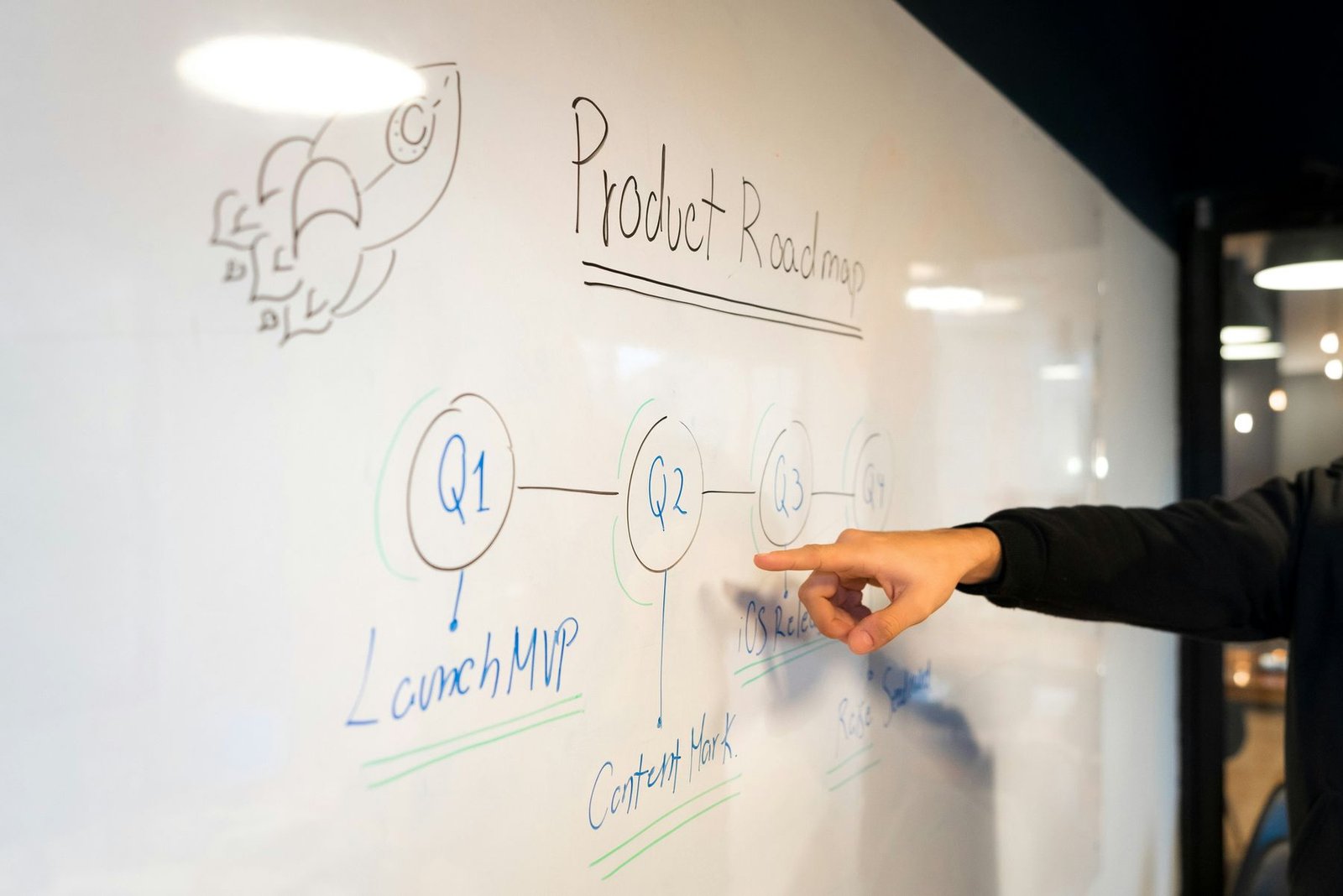
To make the most of YC, run the three months as a growth sprint: set one growth number and the ICP in weeks 1 to 4, run controlled tests in weeks 5 to 8, and double down on what booked calls in weeks 9 to 12. Paul Graham puts a good rate during YC at 5 to 7% a week, so post the number every week and arrive at Demo Day leading with the curve.
Key takeaways
- YC is a three month programme run four times a year, which makes the batch a natural single sprint.
- Paul Graham's benchmark is 5 to 7% weekly growth during YC, measured on revenue where you charge.
- Split the 12 weeks into three blocks: goal and ICP, tests, then double down before Demo Day.
- Post one growth number every week, keep an experiment log and review pipeline with the team monthly.
- Lead with traction on Demo Day, because the pitch is there to win the investor meeting.
Three months goes fast. Between office hours, investor prep and shipping, most founders reach Demo Day with a product that is better and a growth story that is thinner than they hoped.
The fix is to run the batch as a growth sprint. One goal, one number, one buyer, and a fixed rhythm of tests that ends with a curve you can show. Here is a 12-week plan in three blocks, the rituals that keep it honest and what to have ready on the day.
How long is the YC batch, and why run it as a growth sprint?
YC is a three month programme, and YC now runs it four times a year, in the winter, spring, summer and autumn. That window is short enough to treat as a single sprint with one finish line: Demo Day.
YC's own description of the period is telling. It says many founders describe the 11 weeks leading up to Demo Day as the most productive period of their lives. Productive is not the same as pointed. A sprint gives those weeks a direction.
The batch also funds the sprint. YC's standard deal is $500,000: $125,000 on a post-money SAFE for 7%, plus $375,000 on an uncapped SAFE with a most favoured nation provision. YC says the investment is not contingent on hitting milestones and that it does not wait until the batch starts to invest, so the cash is there from week one.
What weekly growth rate should you aim for during YC?
Aim for 5 to 7% a week. Paul Graham writes that a good growth rate during YC is 5 to 7% a week, that 10% a week is exceptional and that 1% is a sign you have not yet figured out what you are doing.
Graham also explains why YC measures weekly: partly because there is so little time before Demo Day, and partly because early startups need frequent feedback from users. Measure revenue if you charge. Measure active users if you do not.
“Focusing on hitting a growth rate reduces the otherwise bewilderingly multifarious problem of starting a startup to a single problem.”
Small differences in the weekly rate compound fast. The example below starts at $10,000 in monthly revenue and applies a steady weekly rate for 12 weeks. The arithmetic is simple: multiply by 1.03, 1.05 or 1.07 once a week.
Example: $10,000 monthly revenue compounded weekly for 12 weeks
1.03 to the power of 12 is 1.43, so $10K becomes about $14.3K.
1.05 to the power of 12 is 1.80, so $10K becomes about $18.0K.
1.07 to the power of 12 is 2.25, so $10K becomes about $22.5K.
Worked example, not market data. Monthly revenue in $K = 10 x (1 + weekly rate) to the power of the week number. Weekly rate benchmarks from Paul Graham, Startup = Growth.
In this example, 7% a week ends the batch with more than twice the starting revenue, and 3% ends it with less than one and a half times. Over a full year the gap widens. Graham's essay puts 1% a week at 1.7x a year and 5% a week at 12.6x.
What should you do in weeks 1 to 4?
Set the goal and the ICP. By the end of week four you should have one growth number with a weekly target, one named buyer and a list of the accounts you will go after.
- Pick the number. Revenue if you charge, active users if you do not. Write the week 12 target next to it.
- Name the buyer. One title, one company size, one trigger that makes them act this quarter.
- Build the first list. Fifty to a hundred accounts that fit the ICP exactly. Quality over size.
- Fix what buyers check. Your LinkedIn profile, the site's first screen and one line on what you do. Buyers look you up before they reply.
- Recruit by hand. Paul Graham's advice is that you can't wait for users to come to you. You have to go out and get them.
- Write down three test ideas. One per channel or message angle. You run them in the next block.
Tip: narrow the ICP until it feels too small. In the AI personalisation for ecommerce case, the founder focused on DTC brands in the $5M to 30M revenue range, plus a few larger groups as stretch accounts. The $15M to 30M band alone held 8 of the 17 brands in pipeline.
Do not skip the fixing step to send sooner. Buyers who do not know you check the founder's profile and the site before they reply, and weak ones cost you replies you never see. In the cybersecurity services engagement, three months of repair came before the first outbound sequence, and yearly qualified pipeline then grew from $548K to $2.2M in twelve months. In a batch you have weeks, not months, so fix the three things buyers see first and leave the rest for after Demo Day.
What should you do in weeks 5 to 8?
Run tests. Every channel and message starts as a controlled experiment against the account list you built, judged on replies and calls booked, not on opens or impressions.
- Change one variable per test: the sender, the angle, the title you lead with or the offer.
- Send from the founder's own LinkedIn and email, in the founder's words. The founder's name is the strongest asset a batch company has.
- Run each test for four to six weeks before you judge it. Tests launched at the end of week four read out in weeks eight to ten.
- Log every reply and every call booked against the test that produced it.
- Kill the losers early in your log, but do not stop a test before it has had a fair run.
Which tests to run first
Start with the tests that change who the buyer hears from and how they first meet you. These are the variables that produced the largest differences in Codax's two published case studies, and each one is cheap to run in a batch.
- Founder-signed invitations against company-signed ones. In the cybersecurity services engagement, founder-signed invitations produced 3x the acceptances.
- Founder ads against company ads. The same engagement saw 2.4x the click-through when ads ran from the founder.
- Retargeting against cold titles. In the agentic AI healthcare engagement, retargeting produced meetings 4x cheaper than cold titles.
- A user track alongside the buyer track. Adding product users to the sequence produced 2x the replies in the healthcare engagement.
- One message angle against another. In the AI personalisation case, angles on conversion, order value and repeat purchase were tested, and only what booked calls was kept.
Run no more than three tests at once in a batch. With a list of fifty to a hundred accounts, more tests than that split the list too thin to read a result, and the founder cannot follow up on every reply.
What should you do in weeks 9 to 12?
Double down before Demo Day. Move all of your volume to the two or three tests that booked calls, and spend the founder's hours on the calls those tests produce.
- Put more volume behind the winning sender, angle and title. Cut the rest.
- Turn your best early customer into a short written case with a number in it.
- Offer a design partner slot or a waitlist to buyers who are not ready to sign. In the AI personalisation case, the waitlist kept brands warm and created urgency.
- Rehearse the Demo Day traction slide against the real numbers every week.
- Book the post-Demo Day follow-ups now, so the pipeline does not stall while you raise.
The 12-week batch sprint
- Weeks 1 to 2Pick one growth number and the week 12 target. Name the buyer.
- Weeks 3 to 4Build the account list. Fix the founder's profile. Write three test ideas.
- Weeks 5 to 6Launch tests from the founder's accounts. One variable each.
- Weeks 7 to 8Log replies and calls per test. Hold a monthly pipeline review.
- Weeks 9 to 10Read out tests. Move volume to the winners. Write one case.
- Weeks 11 to 12Rehearse traction. Demo Day. Book follow-ups for the raise.
What weekly rituals keep a growth sprint on track?
Three rituals keep the sprint honest: one growth number every week, an experiment log the founder keeps every week and a pipeline review with the team every month. The first two take minutes. The third sets the next month.
The sprint rhythm
Monday: post the number
One line to the team. This week's growth number, last week's, and the rate between them.
Through the week: keep the experiment log
The founder records each live test, the replies it produced and the calls it booked. One row per test.
Friday: decide one thing
Read the log and make one decision. Keep, change or kill one test.
Monthly: review pipeline with the team
Go account by account. What moved, what stalled, where the next month's volume goes.
The monthly review is where support from outside fits. Codax reviews pipeline with the founder every month, account by account, and that review sets the next round of volume. The weekly number and the log stay with the founder, because the founder is the one learning from every reply.
What goes in the experiment log
Keep it to one row per test, in a shared sheet the team can read. If a column takes more than a minute a week to fill in, drop it.
- The hypothesis in one sentence, for example "leading with the CMIO books more meetings than leading with the CIO".
- The variable changed and the one held constant.
- The accounts it ran against and the start date.
- Replies, positive replies and calls booked, updated every week.
- The decision: keep, change or kill, with the date it was made.
By week 12 the log is the most useful document you own. It is your positioning, your sales copy and the answer to the question every investor asks after Demo Day: what have you learned about how customers buy?
What traction should you have ready for Demo Day?
Have your growth curve, the number behind it and the names of paying customers or design partners ready on the first slide. YC's guide to Demo Day pitches, by Geoff Ralston, tells founders not to bury the lead and to show impressive traction first.
YC describes Demo Day as the latest batch presenting to an invite-only audience of approximately 1,500 investors and media. Ralston's goal for the pitch is to intrigue listeners enough that they want to meet you and learn more. You are pitching for the meeting.
- The weekly growth rate across the batch, shown as a curve.
- Paying customers or design partners, with what they pay.
- Qualified pipeline by source, so investors see where the next customers come from.
- A bottom-up market: what you sell for and how many buyers exist.
- Your account list and the tests that worked, ready for the follow-up meeting.
How do you make the most of YC without burning out the founder?
Keep the founder as the voice and the closer, and build everything else around a fixed amount of their time. Leaving all of it to the founder is too slow, because every hour spent prospecting is an hour away from the product. Hiring a sales team is too early, because there is no playbook to hand over yet.
The third option is to amplify the founder. The founder owns the product and roadmap, the thesis and the voice, every sales call, closing and terms. Codax amplifies with target lists and buying signals, copy written with the founder, LinkedIn and email outreach at volume and a monthly pipeline review. A growth department is one senior team that owns qualified pipeline end to end, from strategy to execution, under a single accountable lead.
The founder's time is fixed and small. A founder or executive voice gives about 1 to 2 hours a week, captured from recorded interviews, and the CEO gives about 1 hour a week. The rest of the founder's calendar goes to building the product and running the calls the outreach books.
Speed comes from running the early phases together. In the agentic AI healthcare engagement, Assess, Fix and Build were done in two months, and $1.02M ARR closed in seven months from LinkedIn and email. Read the agentic AI healthcare case study and see how we work.
For the full map from batch to Series A, read the YC growth playbook. For what comes next, read the 90 days after Demo Day and how to test and scale a growth channel, or browse the accelerator founders series.
Questions and answers
How do you make the most of YC?
Treat the three months as one growth sprint. Pick one growth number, set a weekly target, name one buyer and run controlled tests against an account list. Keep the founder as the sender and spend the last weeks doubling down on what booked calls.
What should you do during the YC batch?
Set the goal and the ICP in weeks 1 to 4, run tests in weeks 5 to 8 and double down in weeks 9 to 12. Post the growth number every week, keep an experiment log and review pipeline with the team every month.
What weekly growth rate does YC expect?
Paul Graham writes that a good growth rate during YC is 5 to 7% a week. He calls 10% a week exceptional and 1% a sign the company has not yet figured out what it is doing.
How long is Y Combinator?
YC describes itself as a three month programme. It now runs four times a year, in the winter, spring, summer and autumn, and each batch ends with Demo Day.
How do you prepare traction for Demo Day?
Lead with your growth curve and the number behind it, then named customers and pipeline by source. YC's Demo Day guidance is not to bury the lead, and to aim for investors wanting to meet you and learn more.
Sources
- Startup = Growth, Paul Graham
- Do Things that Don't Scale, Paul Graham
- About Y Combinator, Y Combinator
- The YC Deal, Y Combinator
- Demo Day, Y Combinator
- A Guide to Demo Day Presentations, Y Combinator