The short answer
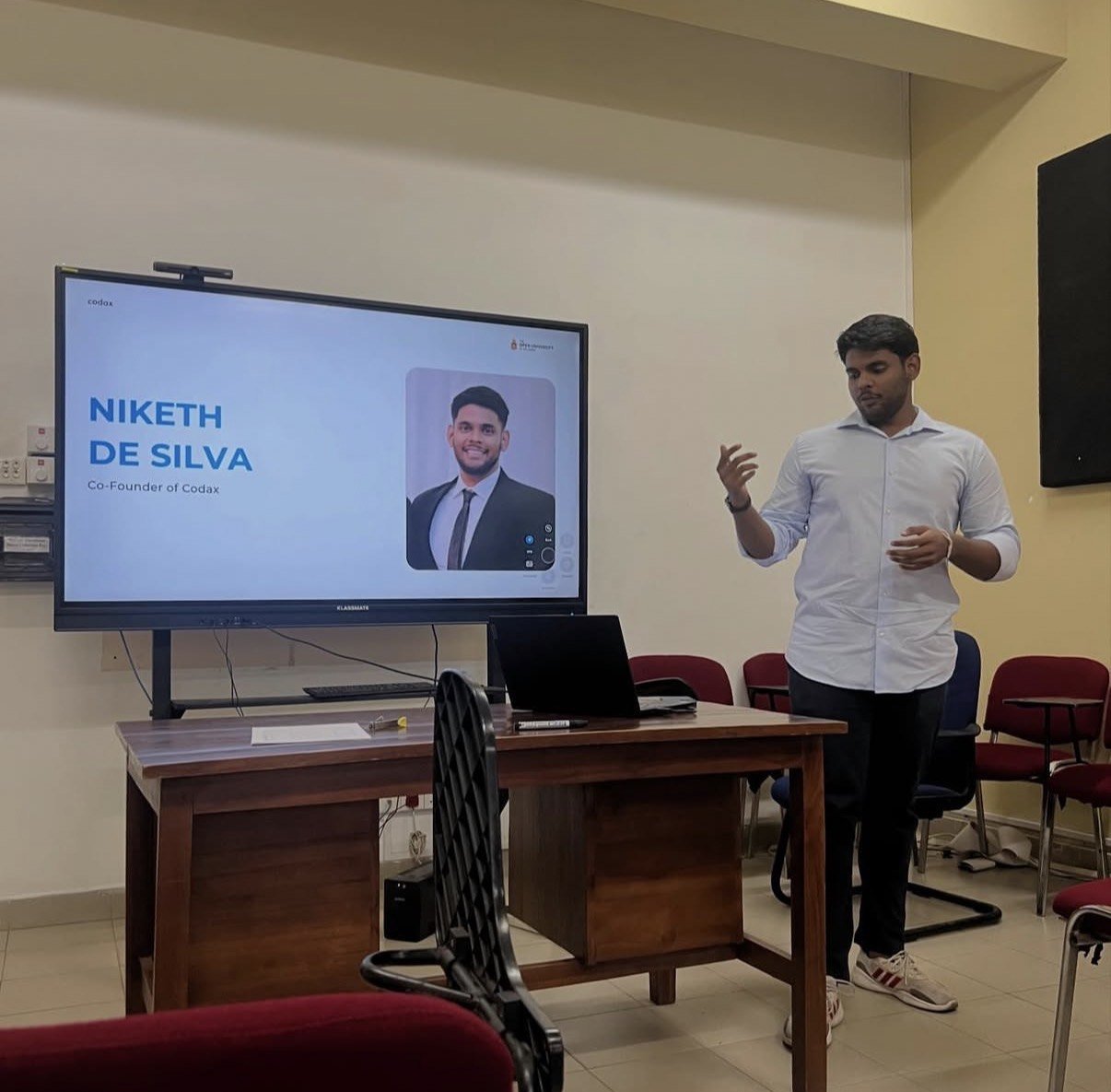
In 2025 Codax Co-Founder Niketh de Silva and Founder Dineth Ratnayake ran a go-to-market workshop for students at The Open University of Sri Lanka. It covered how to take an idea to market, how to build a go-to-market strategy and how to win a first customer, and it challenged the students on why they planned to work for years before starting their own venture.
Key takeaways
- The workshop was led by Codax Co-Founder Niketh de Silva and Founder Dineth Ratnayake.
- It covered taking an idea to market, building a go-to-market strategy and winning the first customer.
- Almost every student planned to work for a few years before starting their own venture.
- Codax's message: action beats the plan, and the experience can be gained on the way.
What was the workshop about?
The session was practical from the first slide. Students brought their own ideas, and Niketh and Dineth worked through how each one could reach a market: who the first customer is, what problem they would pay to have solved, and how to reach them without a budget or a brand.
How to take an idea to market
Find the first customer
Name a real person or organisation with the problem, not a market segment.
Prove the problem
Talk to them before building anything, and learn what they would pay to fix.
Build the go-to-market plan
Decide who you sell to, what you offer, the message, and the one channel you will try first.
Win the first deal
Sell it yourself, learn from every no, and change the offer until someone says yes.
Repeat what worked
Turn the first customer into proof, and use it to win the next one.
These are the same questions Codax answers for established companies in its assessment phase, scaled down to a student with an idea. The difference between a startup and an enterprise is the size of the account list, not the logic.
Why do you need a career before starting your own venture?
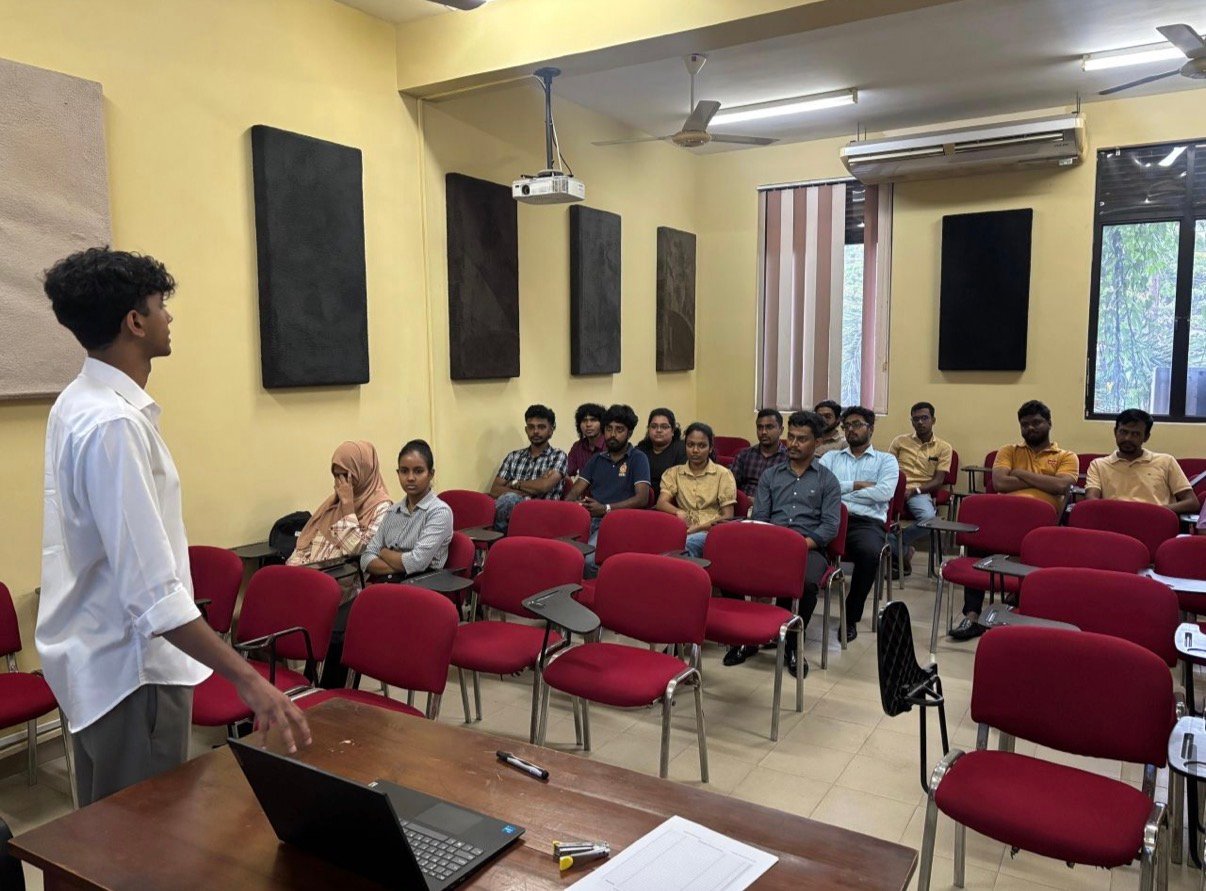
One thing was common to almost everyone in the room. They wanted to work for a few years before building something of their own. So the workshop asked them a direct question: why do you need a career before starting your own venture?
The case for waiting is familiar. You build connections, you save capital and you get exposure. Dineth accepted all three, and then made the case for starting anyway.
“The last two and a half years have taught me that action is always greater than the plan. Collectively we have worked with more than 50 companies, from enterprise to startup, gaining the experience on the go.”
Two ways to get experience
Wait for it
- Work a few years first
- Build connections slowly inside one company
- Start when it feels safe
Earn it while building
- Start with the first customer you can find
- Build connections by selling and delivering
- Learn faster from real wins and real no's
Why Codax runs workshops like this
Codax grew from early work with leading banks and telcos in Sri Lanka into a growth department serving companies across the Americas, Europe and Asia-Pacific. The culture that made that possible is one of ownership and speed, and it is the culture Codax wants to spread to the rest of the country's young talent.
Workshops like this one are part of that. They give students the frameworks Codax uses with clients, and a push to start sooner. For the longer version of the argument, read the story of Dineth's TiE Colombo fireside chat.
Questions and answers
Who led the Open University of Sri Lanka workshop?
Codax Co-Founder Niketh de Silva and Founder Dineth Ratnayake led the workshop together.
What did the workshop cover?
How to take an idea to market, how to build a go-to-market strategy and how to win a first customer, plus a session on why students wait to start their own ventures.
What is a go-to-market strategy?
A go-to-market strategy sets out who you sell to, what you offer them, the message, and the channels you use to reach them. For a new venture it starts with one real customer and one channel.
Does Codax run workshops for universities?
Yes. Codax runs workshops for students and internal teams. Contact info@codax.online to arrange one.