
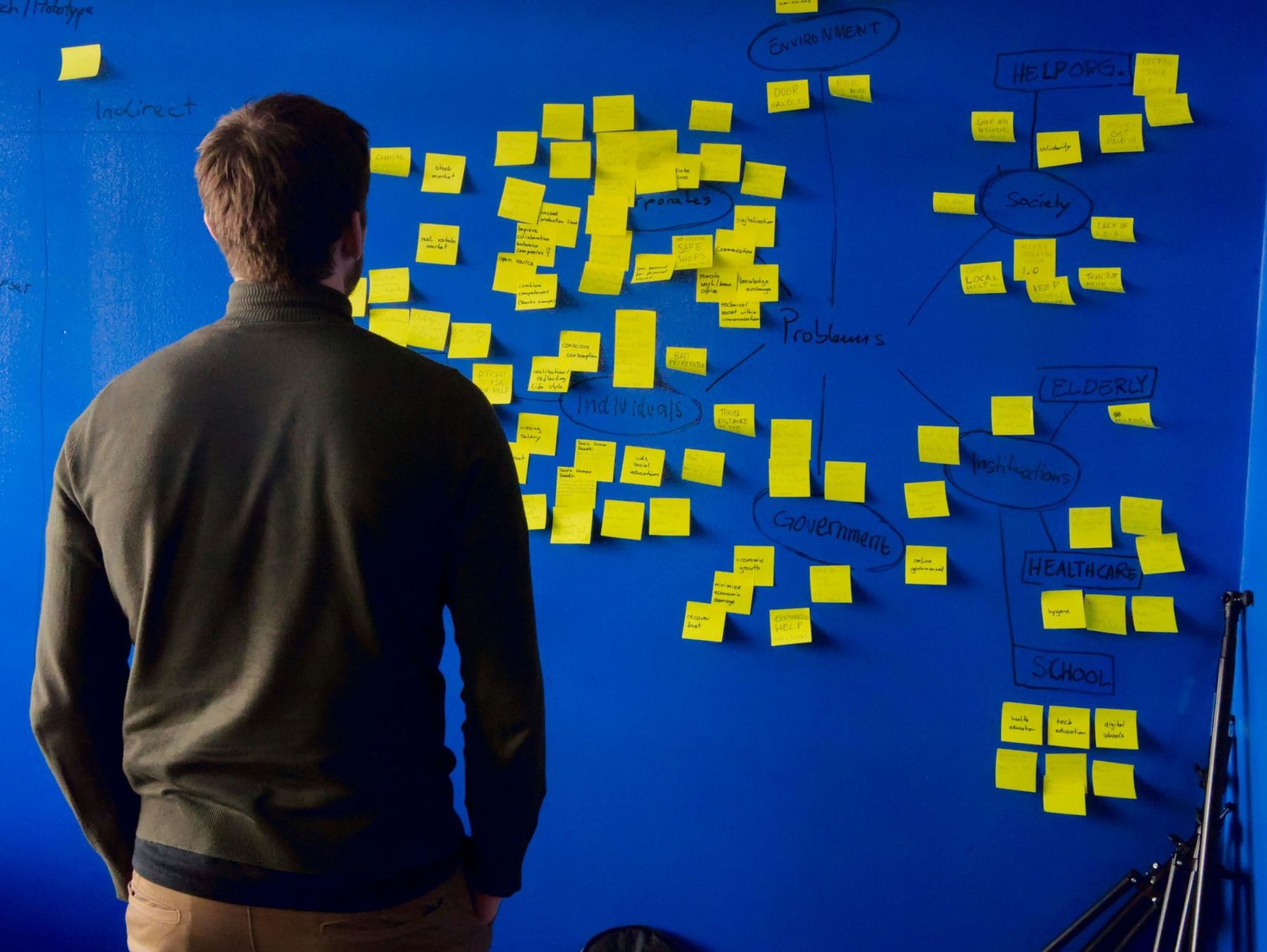
The short answer
B2B buyers today buy as a committee of 10 or more people, research on their own across AI assistants, peers, review sites and vendor content, and contact sellers late with a shortlist already formed. For a startup selling to companies, the B2B buyer journey now means mapping the whole buying committee, creating demand all the time so you are on the shortlist before the first call, and acting on buying signals the same day.
Key takeaways
- Forrester puts the typical B2B buying decision at 13 internal stakeholders and nine external influencers.
- Buyers initiate 79% of engagements with sellers and pick the winner from their Day One shortlist 95% of the time, according to 6sense.
- Gartner found 45% of B2B buyers used GenAI in a recent purchase, and 69% prefer to validate AI-generated insights with a sales rep.
- Map every committee into decision makers, influencers and blockers, and give each one the content their question needs.
- Always-on demand creation and same-day action on signals put a startup on the shortlist before the first call.
If you sell to companies, the buyer you picture is probably one person who finds you, takes a demo and signs. That buyer barely exists any more. Today a group of people researches your category on their own, across AI assistants, peers, review sites and communities, and agrees a shortlist before anyone speaks to you.
This changes what a startup has to do. You cannot win the deal on the first call if the decision is mostly made before it. Here is what the research says about how B2B buyers buy today, and what a startup selling to companies should do about it.
How do B2B buyers buy today?
B2B buyers today buy as a group, research mostly on their own and contact sellers late, with a shortlist already in hand. In 6sense's 2025 B2B Buyer Experience Report, based on nearly 4,000 buyer responses, buyers said they execute two-thirds of their buying journeys, including choosing winning vendors, before engaging with sellers.
When contact happens, buyers start it. 6sense found that buyers initiated 79% of engagements in 2025, and that first contact came about 61% of the way through the journey. That is earlier than the 69% of the two previous years, but still well past halfway. In Gartner's survey of 645 B2B buyers, 67% said they prefer a rep-free experience and 70% prefer a completely digital, self-service buying experience.
The path is not a line either. Gartner describes B2B buying as six jobs that buyers loop through rather than complete in order: problem identification, solution exploration, requirements building, supplier selection, validation and consensus creation. A buyer validating a shortlist goes back to requirements the moment a new stakeholder joins.
The B2B buyer journey, then and now
Then: one buyer, a linear funnel
- One buyer owns the decision
- Awareness, interest, demo and close, in that order
- The sales rep is the main source of information
- The seller makes first contact, early
- Marketing passes a lead to sales once
Now: a committee, many channels
- A buying group of internal stakeholders and outside influencers
- Six buying jobs, revisited in any order
- AI assistants, peers, review sites, communities, events and podcasts
- The buyer makes first contact, with a shortlist ready
- Sales and marketing act on the same signals
How big is a B2B buying committee?
A typical B2B buying committee now has 10 or more people, and Forrester puts the typical decision at 13 internal stakeholders plus nine external influencers. Forrester's State of Business Buying 2026 also found that procurement professionals are decision-makers in 53% of business buying cycles.
6sense reaches a similar number from a different angle: typical purchases involve 10+ people, take close to a year and almost always draw on prior vendor experience. Its average buying cycle was 10.1 months in 2025, down from 11.3 months in 2024.
Larger groups are not only a cost to the buyer. Forrester found that 94% of buyers with groups of six or more report clear benefits. For a startup the lesson is practical. The person who took your first call is one voice among many, and the others are forming a view of you without you.
How many touchpoints are there before a B2B purchase?
There are many touchpoints, spread across many people. 6sense found buyers had an average of 16 interactions per person with the winning vendor. For example, a buying group of 10 people at 16 interactions each adds up to 160 interactions with the vendor that wins.
The shortlist forms early. Buyers evaluate an average of 5 vendors, and 95% of the time the winning vendor is already on the Day One shortlist. Buyers say they have prior personal experience with at least one vendor on their shortlist 97% of the time. If a buyer has never heard of you when the project starts, you are very unlikely to win it.
13 + 9
Internal stakeholders and external influencers in a typical decision (Forrester, 2026)
95%
Share of the time the winner is on the buyer's Day One shortlist (6sense, 2025)
16
Interactions per person with the winning vendor (6sense, 2025)
45%
B2B buyers who used GenAI during a recent purchase (Gartner, 2026)
Codax's own engagements show the same pattern before the first meeting. In the cybersecurity services engagement, accounts took an average of 5 touches before the first call, and 8 in 10 opportunities were touched by three or more channels. The median from first touch to first meeting was 41 days. In the agentic AI healthcare engagement it was 61 days.
Where do B2B buyers research before talking to sales?
B2B buyers research across AI assistants, peers, review sites, communities, events, podcasts and your own content, and they check each against the others. Gartner found buyers used an average of seven information sources during a recent purchase.
AI assistants are now one of those sources. In Gartner's survey, 45% of B2B buyers said they used GenAI during a recent purchase, mainly to gather information on vendors and products. 6sense found that 94% of buyers are using LLMs, and that this has not changed their reliance on vendor content or third-party experts. Pew Research Center found that the share of employed US adults who use ChatGPT for work rose by 20 percentage points in two years, to 28%.
Buyers do not trust AI answers on their own. Forrester notes that answer engines offer speed and efficiency but often deliver incomplete or unreliable information, so buyers turn to trusted networks and external influencers to validate decisions. Gartner found 69% of B2B buyers prefer to validate AI-generated insights with sales reps. So every source has to tell the same story:
- AI assistants summarise what the web says about you. Clear pages, case studies and third-party mentions shape the answer. Read how to get named in ChatGPT and AI answers.
- Peers and communities carry the most trust. Customers who will take a reference call, and a founder known in the right communities, count here.
- Review sites matter in categories where buyers compare tools side by side.
- Events and podcasts let buyers hear how you think before they meet you.
- Your own content is still the reference everyone checks, so it has to answer each stakeholder's question.
How do you sell to a buying committee as a startup?
You sell to a buying committee by mapping it before you sell, then giving each member the proof their question needs. Buyer mapping means building a profile for each stakeholder type, finding each one's pain and learning how each type engages.
Codax builds profiles for decision makers, influencers and blockers in every target account. It also separates the two groups who shape the deal: executive decision authority (the CIO, CISO, CTO, CFO or CEO) and strategic influencers (IT directors, security managers, and operations and HR leaders). Use the table below as your template.
Who shapes the deal, what each needs and which content works
| Who | Examples | What they need | Content that works |
|---|---|---|---|
| Executive decision authority | CIO, CISO, CTO, CFO, CEO | A clear business case and low risk | Case study with one hard result, founder briefing |
| Strategic influencers | IT directors, security managers, operations and HR leaders | Proof it works in their environment | Technical guide, integration detail, webinar |
| Decision makers | The budget holder for the problem | Return on spend and a safe way to start | Worked ROI example, pilot or design partner plan |
| Influencers and users | The people who will use it daily | An easier working day | Trial, short demo video, peer story |
| Blockers | Security, legal, procurement | Answers before they ask | Security pack, standard terms, references |
| External influencers | Advisers, peers, analysts, communities | Something credible to repeat | Founder content, third-party mentions, reviews |
Then work the map. In the agentic AI healthcare engagement, the committee was the CIO, the CMIO and the operations executive. Leading with the CMIO produced 2.1x the meetings, and adding a user track produced 2x the replies. Every account that closed had 5+ product users engaged. The deal was won across the committee, not in one inbox.
Use your first call to fill in the map. Ask these five questions every time:
- Who else will be involved in this decision? Write down every name and role you hear.
- Who has to approve the budget? That person is your executive decision authority.
- Who will use it every day? Users decide whether a trial succeeds.
- What does security, legal or procurement need to see? Send it before they ask.
- Who outside the company do you trust on this? Advisers, peers and analysts are part of the committee too.
For security reviews, procurement and credibility with large companies, read selling to enterprises as an unknown startup.
How do you get on the shortlist before the first call?
You get on the shortlist by creating demand all the time, not only when a campaign is running. Buyers fill most of their shortlist on Day One, from vendors they already know, so the work that wins the deal happens months before the project starts.
Always-on demand creation means a steady flow of LinkedIn content, thought leadership, case studies, whitepapers, webinars and podcasts aimed at decision makers and decision influencers in your target accounts. It is how a buyer comes to have prior experience with you before they need you. Follow these steps.
Get on the shortlist before the first call
Agree the account list
Pick the accounts you want and agree them with whoever sells. Everything that follows targets this list.
Map each committee
Name the decision makers, influencers and blockers in each account, with their pain and the channels they use.
Fix what buyers check
Make the founder's profile, the website and the proof pages answer each stakeholder's question.
Publish all the time
Run founder-led LinkedIn content, a newsletter and regular webinars on the problems each stakeholder owns.
Capture the signals
Score engagement from mapped people and accounts, and pass qualified signals to sales the same day.
Review monthly
Review pipeline account by account every month and move effort to what converts.
Webinars show how this works. In the agentic AI healthcare engagement, 5 webinar sessions drew 618 registrants and produced $1.1M in pipeline, and a health system speaker produced 2.6x the registrations. Content that gives one committee member something to share with colleagues does the work of several sales calls.
How should sales and marketing work together on buying signals?
Sales and marketing should work from one account list, one definition of a qualified signal and one rule for how fast it is acted on. When buyers contact you late and as a group, a missed signal is a missed deal.
Demand creation produces signals: a follow, a poll vote, a webinar registration, a second visit from the same account. Demand capture turns them into conversations through signal scoring and alignment between sales and marketing. In every Codax engagement, positive replies and signals reach sales the same day, and pipeline is reviewed with leadership every month, account by account.
Bring people in where buyers want them. Gartner found buyers are 1.8 times more likely to complete a high-quality deal when they engage with supplier-provided digital tools in partnership with a sales rep. The aim is conversations at the right moment, with the right person, that move the committee forward. For the scoring model itself, read signal-based selling for startups.
What does the new buyer journey mean for an accelerator founder?
For an accelerator founder, it means finding the real buyer early and putting the founder in front of the whole committee, not only the first contact. Your design partners came from your network. Your next customers are researching without you.
Take the accelerator-stage revenue cycle AI company. It automates billing and collections and grows by partnering with and then acquiring independent RCM companies, running them on its own AI. The buyer was not a procurement team. It was an owner deciding who to trust with a business they spent years building, so standard SaaS outbound did not start the conversation.
That buyer map shaped everything that followed. Outreach went straight to founders and owners of independent billing and revenue cycle firms, never procurement. The message was about their future: succession, staffing, margins and the cost of keeping up with technology, tested with the founder until replies became calls. A design partner offer lowered the stakes and let owners see the product inside their own operation. Codax kept the calendar full, and the founder ran every conversation from first call to terms.
The result was $8M ARR in design partnership across two acquisitions, of $7M ARR and $1M ARR, from a $15M acquisition pipeline. That is 53% of the acquisition pipeline in design partnership, with further targets worth $7M ARR in pipeline. For the first step, read how to win paying design partners.
The AI personalisation for ecommerce startup applied the same principle at a smaller deal size. A tight ICP of DTC brands in the $5M to 30M revenue range, outreach from the founder's own LinkedIn and email, and a design partner waitlist for brands not ready to commit produced 17 brands in qualified pipeline worth $472K and 3 paying design partners.
This is the work of a growth department. A growth department is one senior team that owns qualified pipeline end to end, from strategy to execution, under a single accountable lead. For founders, Codax amplifies the founder: the founder owns the thesis, the voice and every sales call, and Codax builds the target lists, buying signals, copy and outreach around them. See how we work and the accelerator founders series.
Questions and answers
How do B2B buyers buy today?
B2B buyers buy as a group, research on their own across many sources and contact sellers late. 6sense found buyers initiate 79% of engagements and first contact sellers about 61% of the way through the journey. Most of the shortlist is set before any sales call.
What is the average B2B buying committee size?
Forrester's State of Business Buying 2026 puts the typical decision at 13 internal stakeholders and nine external influencers. 6sense's 2025 report found buying groups average 10+ members. Procurement professionals are decision-makers in 53% of buying cycles, according to Forrester.
How many touchpoints are there before a B2B purchase?
6sense found buyers had an average of 16 interactions per person with the winning vendor, across a buying group of 10 or more. In the Codax cybersecurity services engagement, accounts averaged 5 touches before the first call, and 8 in 10 opportunities were touched by three or more channels.
How do you sell to a buying committee as a startup?
Map the committee before you sell. Build profiles for decision makers, influencers and blockers, separate executive decision authority from strategic influencers, and give each one the proof their question needs. Then create demand all the time so the whole committee knows you before the project starts.
Do B2B buyers use AI to research vendors?
Yes. Gartner found 45% of B2B buyers used GenAI during a recent purchase, mainly to gather information on vendors and products. Buyers still check those answers, and 69% prefer to validate AI-generated insights with a sales rep.
Sources
- The B2B Buyer Experience Report for 2025, 6sense
- Forrester's 2026 Buyer Insights: GenAI Is Upending B2B Buying As Leaders Face Mounting Pressure To Justify Every Dollar Spent, Forrester
- Gartner Survey Finds 69% of B2B Buyers Turn to Sales Reps to Validate AI-Generated Insights, Gartner
- The B2B Buying Journey, Gartner
- 34% of U.S. adults have used ChatGPT, about double the share in 2023, Pew Research Center