

Every engagement begins with an assessment and plan.

Arrange an assessment
Codax Accelerator case studyMartechAI personalisationPre-revenueFounder-led sales

17 brands in pipeline and 3 paying design partners in one of the most crowded categories in software

An accelerator-stage startup building 1:1 AI personalisation for ecommerce in a market of more than 15,000 marketing tools. Codax amplified the founder and turned a sceptical market into paying design partners.

$472K

Qualified pipeline

17

DTC brands in qualified pipeline

$126K

ARR from 3 paying design partners

$10.5K

Monthly revenue from 3 paying design partners

Part of the Codax Accelerator

This company is a startup from the Codax Accelerator, not a growth department engagement.

The Codax Accelerator is our programme for accelerator-backed founders. Instead of running a full growth department, we put an extended growth team behind the founder and amplify what they are already doing, so the founder owns growth without spending every hour on it.

How the Codax Accelerator works

90 days

Assess and fix in two weeks, then build, test and scale together

$1,500 a month

An extended growth team across outbound, design partners and advisory

Founder-led

The founder stays the voice and the closer on every deal

Follow-on

A follow-on investment considered for the next round

About the startup

Accelerator-stage martech startup

AI-driven 1:1 personalisation for ecommerce and DTC brands

Most online stores still show every visitor much the same storefront. The company builds AI that decides what each shopper sees, one person at a time, so a brand's existing traffic converts better, spends more and comes back. Its technical edge comes from its team: the CTO spent a decade at Adobe building data products. It came to Codax pre-revenue, with a working product, and with the founder selling, building and raising at the same time.

The founder edge

A CTO who spent a decade at Adobe building data products, and a founder who sold every deal while building and raising. Decisions are made per shopper, from the brand's own first-party data.

At a glance

From ignored outbound to paying design partners

Before

A working product, no revenue and a founder already doing outreach that was getting ignored. A category where every brand had heard the pitch before.

What we did

Found the segment the founder could win, rebuilt the founder's profile and positioning, ran LinkedIn and email from the founder's accounts, tied every message to a cost the brand already feels and built a design partner offer that closes.

After

17 DTC brands in qualified pipeline worth $472K, 4 brands with an LOI signed, and 3 paying design partners worth $126K ARR at $3.5K a month each.

01 The market

A real problem in a saturated category

Shoppers expect personalisation and brands know it pays. The same facts have filled the market with vendors and left buyers sceptical of every new one.

Exhibit 1. Marketing technology products on the market

150
2012
14,106
2024
15,384
2025

Solutions on the chiefmartec landscape, across 49 categories in 2025, up 9% in a year.3

Exhibit 2. Shoppers want it. They do not yet trust it.

Consumers who expect personalised interactions271%
Get frustrated when it does not happen176%
Become repeat buyers after a personalised experience456%
Are comfortable with companies using AI to personalise441%

Share of consumers surveyed. McKinsey, 2021, and Twilio Segment, 2023.

Exhibit 3. The gap a new vendor has to close

The promise

10 to 15%

The revenue lift personalisation most often drives, with company results from 5% to 25%. Companies that grow faster drive 40% more of their revenue from it.1

The doubt

80%

Of marketers who invested in personalisation that Gartner predicted would abandon it by 2025, citing lack of ROI and the difficulty of managing customer data.2

For a new personalisation vendor, that gap is the whole sales problem. Brands believe in the outcome and doubt the vendor. Only proof closes it.

Clothing on a rail in a boutique window

Every DTC brand is paying more for the same visitor.

Acquisition costs have climbed for a decade, so the traffic a brand already has is worth more than ever. That is the opening for personalisation, and the reason every vendor is chasing the same brands.

222%

Rise in customer acquisition cost over eight years5

$29

Lost on each new customer in 2022, from $9 in 20135

70.22%

Average cart abandonment rate6

The insight

DTC brands from $5M to 30M feel the cost of acquisition every month, buy without a procurement cycle and want proof before they commit. That became the ICP, and paid design partners became the proof.

$5M to 30M

Core revenue band

Proof

Paid design partners

02 The strategy

Four moves, one founder's voice

Hiring a sales team was too early, because the message was still being found. Leaving it all to the founder was too slow. So we amplified the founder.

1

A tight ICP

DTC brands in the $5M to 30M revenue range, plus a few larger groups as stretch accounts. Big enough to feel the cost of acquisition, small enough to move without a procurement cycle.

2

The founder's voice, amplified

Outreach ran from the founder's LinkedIn and email, in their words, sharpened with them every round. In a market of vendor messages, a founder writing to a brand owner reads differently.

3

Copy tested in the open

Angles on conversion, order value and repeat purchase, each tied to a cost the brand already carries. We kept what booked calls and cut the rest.

4

A waitlist that closes

Brands not ready to commit joined a design partner waitlist. It kept them warm, created urgency and turned interest into LOIs.

Foundervoice, calls, closingOutreachLinkedIn and emailFounder profilepositioning that sellsDesign partnersoffer, waitlist, LOIsAdvisoryICP, pricing, GTM

The founder owns

  • Product and roadmap
  • The thesis and the voice
  • Every sales call
  • Closing and terms

Codax amplifies

  • Target lists and buying signals
  • Copy written with the founder
  • LinkedIn and email outreach at volume
  • A monthly pipeline review

Copy is tested together every round. What books calls gets more volume.

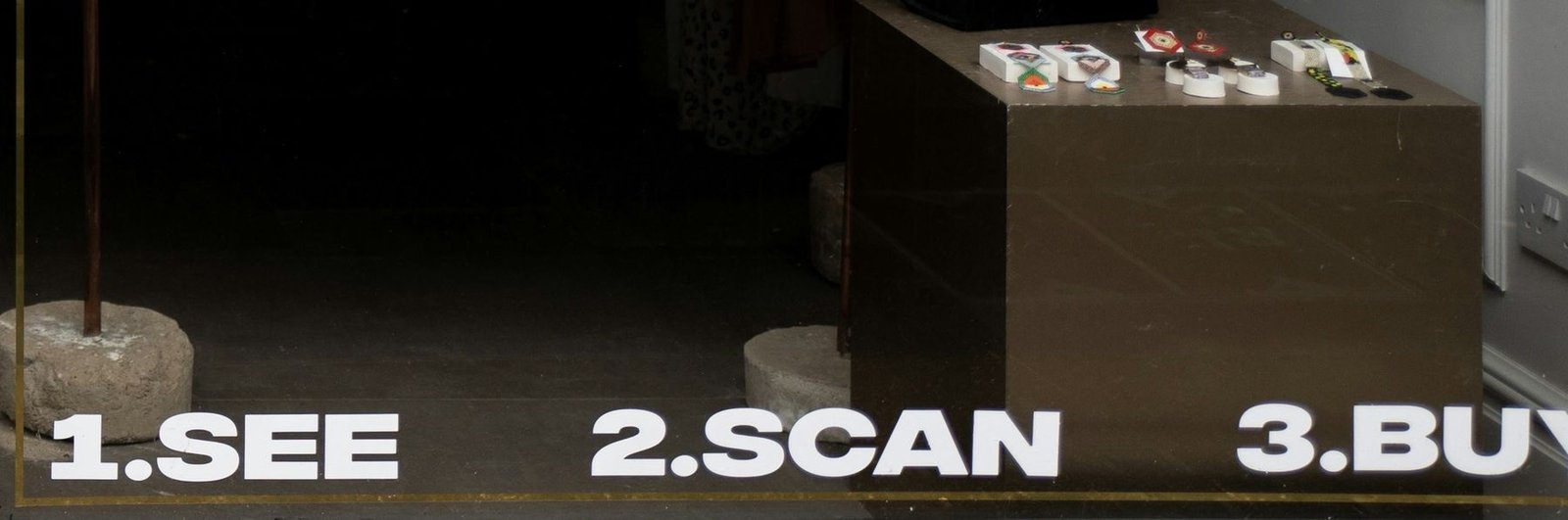
A shop window with the words see, scan, buy across the glass

See, scan, buy. Every step is a moment to personalise.

Shoppers move from seeing to buying in a few steps. Personalisation decides what each one sees along the way.

03 The work

What we did, step by step

The founder's profile, the ICP, outreach on LinkedIn and email, message testing, design partner strategy and advisory, run around one founder.

1

Profile and positioning

Assess and fix

Brand owners look up the founder before they reply. In a crowded category, the profile has to answer why this team, and why now.

Founder profile

A profile that tells the story

The founder's LinkedIn rebuilt around the problem they solve for DTC brands, with the thesis in their own words, so every brand that looked them up saw a reason to take the call.

Team credibility

The data pedigree, up front

The CTO's decade at Adobe building data products became part of the story. In a market of new AI vendors, it answered the question every brand asks: can this team handle our data.

Positioning

Outcomes, not models

Messaging moved from a generic AI pitch to the three numbers a brand owner already tracks: conversion, order value and repeat purchase.

2

The ICP and the list

Assess and fix

One segment, chosen on purpose, with a few larger groups as stretch accounts.

ICP

DTC brands from $5M to 30M

Big enough to feel acquisition costs, small enough to decide without a procurement cycle.

Stretch accounts

A few larger groups

A few larger groups, above $100M in revenue, were added as stretch accounts and worked with the same founder-led motion.

Lists and signals

The right brands, ready now

Target lists built and enriched against the ICP, with buying signals used to decide who to reach first.

3

Outreach at volume

Build

Outreach ran from the founder's own accounts, in their words. We scaled what the founder was already doing instead of replacing it.

LinkedIn

From the founder's profile

Connection requests and messages sent from the founder's LinkedIn to the brands on the list, so every conversation started with the person who would run it.

Email

In the founder's voice

Email sequences written with the founder and sent under their name, timed alongside LinkedIn.

Calendar

Replies into calls

Positive replies turned into booked calls, so the founder's hours went into conversations, not prospecting.

A person editing an ecommerce storefront on a laptop

Who we wrote to

The people who own the storefront

Founders, ecommerce leads and growth owners at DTC brands, the people who see conversion, order value and repeat purchase every day.

17

Brands in qualified pipeline

$28K

Average ARR potential per brand

4

Copy tested in the open

Test

Every round, copy was written with the founder and judged on one thing: did it book calls.

Exhibit 5. Each message angle was tied to a cost the brand already feels

Angle 1

Conversion

Most carts never become orders.

70.22%

Average documented cart abandonment rate, across 50 studies.6

Angle 2

Order value

Every new customer costs more to win.

222%

Rise in customer acquisition cost over eight years, with brands losing $29 on each new customer in 2022, up from $9 in 2013.5

Angle 3

Repeat purchase

Loyalty is where the margin is.

56%

Of consumers become repeat buyers after a personalised experience.4

We kept what booked calls and cut the rest. What books calls gets more volume.

5

Design partners and advisory

Scale

A design partner offer turned scepticism into commitment, and strategic advisory kept the go-to-market sharp as the pipeline grew.

Design partner strategy

A waitlist that closes

Brands not ready to commit joined a design partner waitlist. It kept them warm, created urgency and moved brands from interest to an LOI.

Paid from day one

$3.5K a month each

Design partners paid from the start. That proved pricing, answered the ROI doubt with real usage and gave the founder a revenue line for investors.

GTM refinement

Where to focus next

The pipeline showed the $15M to 30M band was the core, holding 8 of 17 brands and 43% of pipeline value. Volume moved behind it.

Strategic advisory

Built around the raise

Advice on pricing, roadmap input from design partners and how to tell the pipeline story while the founder raised.

Upmarket proof

The same motion, larger groups

Larger groups came in through the same founder-led outreach, including a $100K opportunity from a $500M+ group.

Monthly pipeline review

Account by account

Each review set the next round of volume and the next round of copy.

04 The impact

17 brands in pipeline, 3 paying design partners

Exhibit 6. Pipeline by stage

Qualified pipeline, $472K17 brands
LOI signed4 brands
Paying design partners, $10.5K a month3 brands

Exhibit 8. ARR potential by brand revenue

$1M to 5M, 1 brand$12K
$5M to 15M, 6 brands$114K
$15M to 30M, 8 brands$204K
$100M to 200M, 1 brand$42K
$500M to 1B, 1 group$100K

Exhibit 7. The core of the pipeline

8 of 17 brands sit in the $15M to 30M band

The ICP held. The brands the strategy aimed at are the brands that came in, and that told the founder where to put the next round of volume.

$28K

Average ARR potential per brand

$100K

Largest single opportunity, a $500M+ group

$10.5K

Monthly revenue from design partners

3

Paying design partners at $3.5K a month

A laptop showing an online store product grid

Proof the next brand and the next investor can see.

Paying design partners turned a sceptical category into evidence: pricing that holds, a roadmap shaped by real brands and a pipeline concentrated where the strategy aimed.

$472K

Qualified pipeline

$126K

ARR from design partners

43%

Of pipeline value in the core band

05 What it shows

Selling AI personalisation as a startup

Four things this engagement shows about winning first customers in a crowded category.

01

Do not fight a crowded category on features

With more than 15,000 marketing technology products on the market, a better model is not a reason to reply. A specific buyer, a specific cost and a founder's voice are.

02

Sell proof, not a pitch

Buyers believe in personalisation and doubt vendors. Paid design partners turn that doubt into evidence, and evidence is what the next brand and the next investor want to see.

03

Pick a segment you can win

DTC brands from $5M to 30M feel acquisition costs every month and decide without a procurement cycle. They were reachable, motivated and underserved.

04

Amplify what the founder is already doing

The founder was already selling. The job was to give that voice reach, sharpen it every round and keep the founder in every conversation.

Client perspective

“We were building, selling and fundraising all at once. Codax didn't take sales off my plate. They made every hour I put into it count.”
Founder and CEOAI personalisation platform for ecommerce

Sources

  1. The value of getting personalization right, or wrong, is multiplying, McKinsey & Company, November 2021
  2. Gartner predicts 80% of marketers will abandon personalization efforts by 2025, Gartner, December 2019
  3. 2025 Marketing Technology Landscape Supergraphic, chiefmartec, May 2025
  4. 92% of businesses use AI-driven personalization but consumer confidence is divided (Twilio Segment, State of Personalization 2023), VentureBeat, May 2023
  5. Brands losing a record $29 for each new customer acquired, SimplicityDX via Marketing Dive, July 2022
  6. Cart abandonment rate statistics, Baymard Institute, updated September 2025

Market figures are from the sources listed. Client figures are from the engagement.

Next case study

2 RCM companies in design partnership, worth $8M ARR

Revenue cycle AI, Codax Accelerator

Read the case study

The Codax Accelerator

The same model, for your 90 days

An extended growth team across outbound, design partners and advisory, built around the founder, from founders and growth leaders who have scaled.

$1,500 a month

90 days. A follow-on investment considered for your next round.

See the Codax Accelerator