Fireside chat · TiE Colombo
Building enterprises in the age of AI
Codax Founder Dineth Ratnayake and Hariharan Padmanaban, Country Head for Hexaware Technologies in Sri Lanka, sat down at TiE Colombo to talk about building companies that last: who to hire, how to grow, and when to change course.
- Format
- Fireside chat
- Host
- TiE Colombo
- Venue
- Cinnamon Life Office Spaces, Colombo 02
- Date
- 26 September
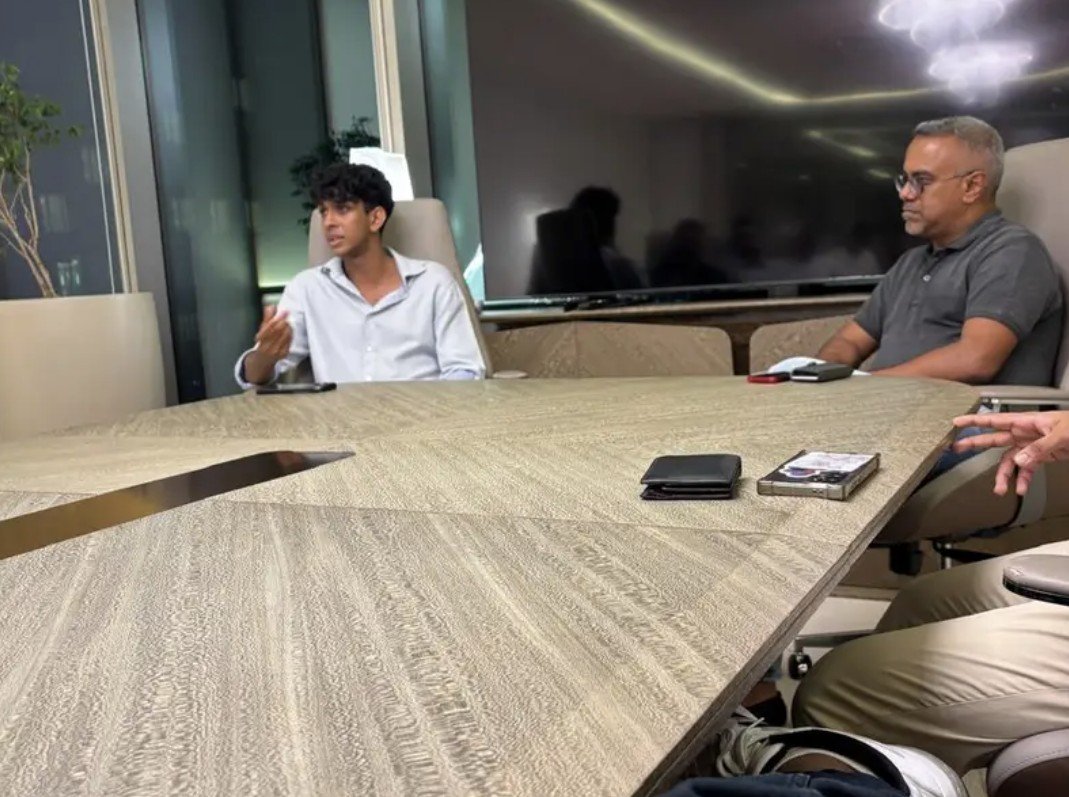
TiE Colombo brought founders, operators and investors together at Cinnamon Life Office Spaces in Colombo 02 for a fireside chat on what it takes to build an enterprise from Sri Lanka today. The speakers came at the question from two directions: one building a growth firm that serves clients on three continents, the other leading the Sri Lanka operation of a global technology services company.
The speakers
Dineth Ratnayake
Founder, Codax
Dineth founded Codax, a dedicated growth department for B2B companies, and has run go-to-market across healthcare, martech and services businesses.
Hariharan Padmanaban
Country Head, Sri Lanka, Hexaware Technologies
Hariharan leads Hexaware's Sri Lanka operation. Hexaware is a global IT services company that is building its team in Colombo and investing in the country's technology talent.
What the conversation covered
Building an enterprise, not just a startup
The conversation started with ambition. Both speakers argued for building companies designed to last and to scale beyond their home market, rather than products built for a quick exit. Dineth spoke from building Codax from London into a growth department serving clients across the Americas, Europe and Asia-Pacific. Hariharan spoke from establishing Hexaware's presence in Sri Lanka as part of a global technology services company.
Hiring and talent
Talent was the thread through the hour. Sri Lanka has a young, technically strong workforce, and the question is how companies find it, develop it and keep it. The discussion covered hiring for ownership over credentials, giving early-career people real responsibility from the start, and reskilling experienced professionals as the work changes around them.
Growth that holds
On growth, the focus was on systems rather than spikes. Growth that holds comes from a clear account of who the customer is, a repeatable way of reaching them, and the discipline to measure what converts and move resources to it. AI came up as leverage: it shortens the distance between an idea and a working product, which lets small, senior teams do work that once needed large organisations.
Knowing when to pivot
Both speakers spoke about changing course. Codax itself began as an enterprise account-based marketing firm and grew into a full growth department because clients kept asking for more of the team. The point made was that a pivot is a response to evidence from customers, not a reaction to a bad quarter, and that the companies that endure are the ones that read those signals early.
About TiE
TiE, The Indus Entrepreneurs, was founded in Silicon Valley in 1992 by a group of successful entrepreneurs and executives who wanted to help the next wave of founders. It has grown into one of the largest entrepreneur networks in the world, with around 60 chapters in more than a dozen countries.
Its work rests on five pillars: mentoring, networking, education, funding and incubation. Charter members, experienced entrepreneurs who join by invitation, give their time to younger companies, and the flagship TiEcon conference in Silicon Valley draws thousands of founders, investors and executives each year.
TiE Colombo is the network's Sri Lanka chapter, led by founding president Madu Ratnayake, with a goal of nurturing 10,000 global entrepreneurs from Sri Lanka.
1992
Founded in Silicon Valley
~60
Chapters worldwide
10,000+
Members, including charter members
Why it matters to Codax
Codax was built on the same idea TiE was: that experienced operators sitting beside founders is the fastest way to build companies that last. Conversations like this one are part of how the Codax team learns, and part of how it gives back to the ecosystem it grew out of.
Start here
Every engagement begins with an assessment of what is already running
Findings shared in full, with a prioritised repair list, before anything is agreed.
What you receive
- A written report of everything found
- A prioritised repair list
- A first read on the account list
- A recommended plan across the five phases